
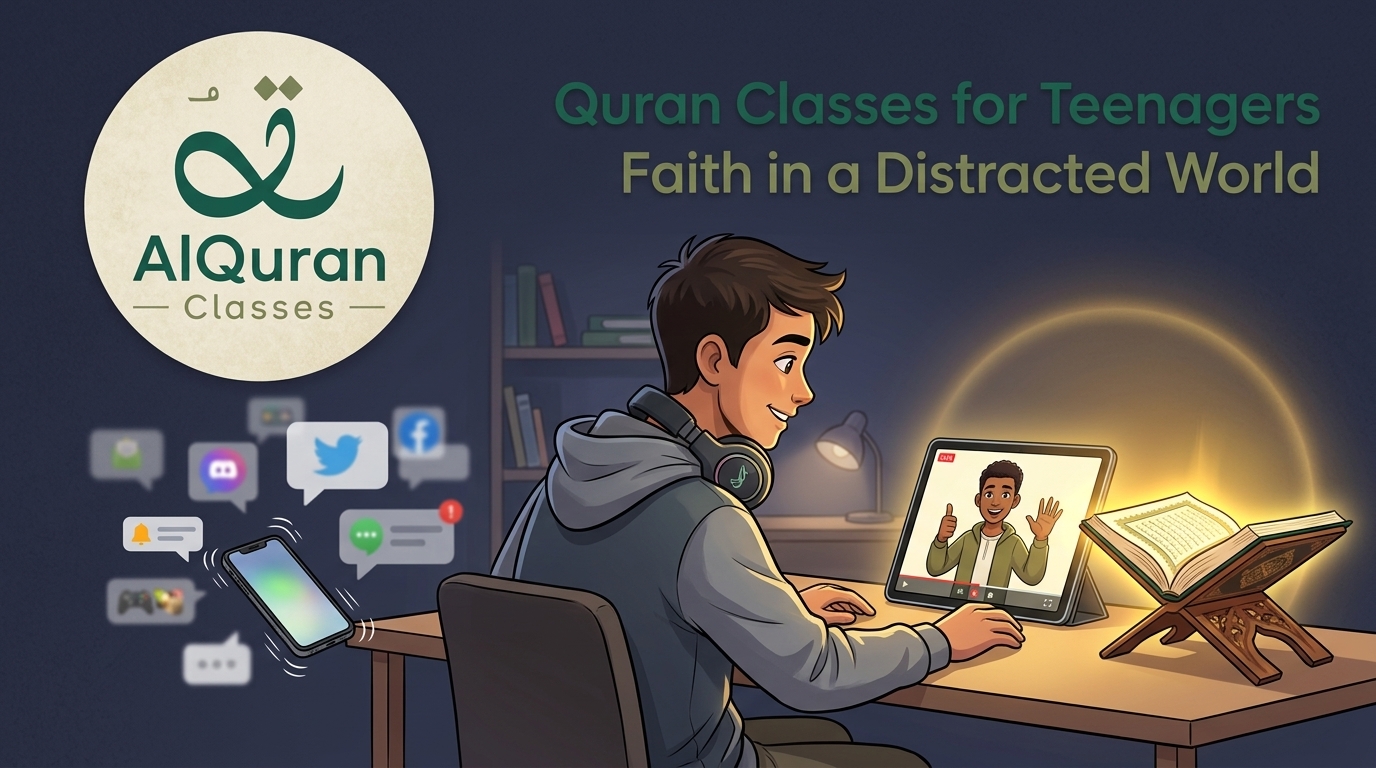
It usually happens quietly. The child who once ran to Quran class at seven starts negotiating at thirteen. By fifteen, the Mushaf sits untouched on the shelf while TikTok, group chats, exams, and sports fill every waking hour. If this sounds like your home, take a breath: you haven't failed, and neither has your teenager. The teenage years are when almost every Muslim family feels this drift — and they're also the years when the right approach can turn the Quran from a childhood chore into a lifelong anchor.
Here's what actually works, and why Quran classes for teenagers need to look very different from classes for seven-year-olds.
Why Teens Drift from the Quran (It's Not Rebellion)
Understanding the why changes how we respond:
Their world got louder. The average teen processes more digital stimulation in a day than previous generations did in a week. A quiet page of Arabic competes with an algorithm engineered to win.
Childhood methods stopped working. Sticker charts and "because I said so" motivate a 7-year-old. A 15-year-old needs meaning — and if their Quran education never moved past pronunciation into understanding, the Quran can feel like a language exercise with no personal relevance.
Identity questions arrived. Teens at Western schools navigate questions about faith their parents never faced at that age. Without confident answers, some quietly disengage rather than feel embarrassed.
Embarrassment about skill level. Many teens secretly feel their recitation is "too weak for their age" — so avoiding the Quran feels safer than facing that gap in front of others.
Notice what's not on this list: laziness or bad character. Teens don't need pressure. They need a format built for who they are now.
What Makes Online Quran Classes for Teens Different
Online Quran classes for teens solve the exact problems that make masjid classes hard for this age group:
Privacy protects pride. In a 1-on-1 online class, a 16-year-old who reads at a "younger" level faces zero peers, zero comparison, zero embarrassment. Just a patient tutor. This single factor rescues more teen learners than anything else.
Scheduling respects their reality. Classes fit around school, sports, and exams — including evening and weekend slots — instead of competing with them.
It happens on their turf. Teens live on screens. A live video class with a tutor meets them in their native environment, turning Quran and screen time from enemies into allies.
Tutors who "get" teens. The right teacher for a teenager is part instructor, part mentor — someone who discusses meaning, answers real questions, and treats them like the young adults they're becoming.
Rebuilding Quran Motivation for Teenagers: 5 Shifts That Work
Practical, tested changes for parents — this is where Quran motivation for teenagers actually comes from:
Lead with meaning, not just recitation. Teens engage when Surah Yusuf becomes a story about jealousy, patience, and injustice — themes they live daily. Ask their tutor to weave translation and reflection into lessons.
Give them ownership. Let your teen choose the class time, the surah goals, even (within reason) the tutor. Autonomy is oxygen at this age; what they choose, they keep.
Shrink the ask. "Two 30-minute classes a week" wins where "an hour of Quran every day" triggers instant resistance. Small and consistent beats big and abandoned.
Connect it to their identity questions. Frame the Quran as the source of confident answers, not another obligation. Teens who understand why they believe walk taller at school.
Watch your own relationship with the Quran. Teens have flawless hypocrisy detectors. A parent who reads even one page daily preaches louder than a thousand lectures.
Islamic Identity for Muslim Teens: The Bigger Picture
Here's what's really at stake — and why this matters more than test scores. Research on Muslim youth in the West consistently shows that religious literacy is one of the strongest protective factors for wellbeing, resilience, and self-esteem. Islamic identity for Muslim teens isn't built by rules alone; it's built by connection — knowing the Quran speaks to their life, having an adult (beyond parents) who nurtures their faith, and feeling competent rather than ashamed in their practice.
A weekly Quran class with a mentor-tutor quietly provides all three. Many parents tell us the change they notice first isn't recitation — it's confidence.
Hifz for Teenagers: Is It Too Late to Start?
Absolutely not — and this deserves saying loudly, because many families believe Hifz is only for young children. Hifz for teenagers comes with real advantages:
Mature comprehension: Teens understand what they memorize, which strengthens retention and makes the journey meaningful rather than mechanical.
Study skills: By 13–17, students already know how to prepare for exams. Those same skills — spaced repetition, chunking, scheduling — are exactly what Hifz requires.
Self-driven intention: A teen who chooses Hifz brings motivation no parent could ever impose.
Whether the goal is the full Quran, Juz Amma, or the surahs of daily prayer, a structured plan with a certified Hafiz tutor makes it achievable alongside school.
A Realistic Teen Quran Routine (School-Year Edition)
A sustainable teen Quran routine most families can actually keep:
2 × 30-minute online classes per week (recitation/Tajweed or Hifz with their tutor)
10 minutes daily — one page of reading or revision, anchored to an existing habit like after Fajr or before bed
1 meaning moment per week — a short tafseer discussion in class or a family conversation about one verse
Exam-season mode: classes reduce, but never fully stop — momentum matters more than volume
That's under two hours a week. Small enough to sustain, big enough to change a teenager's trajectory.
Give Your Teen a Teacher Who Gets Them
The teenage years aren't the end of your child's Quran journey — handled right, they're the beginning of the real one: the years when faith becomes their own.
AlQuranClasses pairs teenagers with patient, relatable male and female tutors who teach recitation, Tajweed, Hifz, and meaning — in private 1-on-1 classes scheduled around school. Book a free trial and let your teen meet a teacher who speaks their language.
👉 Book a Free Trial Class for Your Teen
FAQs: Quran Classes for Teenagers
My teen resists everything Islamic right now. Will classes even help? Often, yes — because resistance is usually to pressure and embarrassment, not to the Quran itself. A private class with a mentor-style tutor removes both. Let your teen help choose the tutor and time.
Are classes private? My teenager is self-conscious about his recitation level. Completely. All classes are 1-on-1 — no peers, no comparison. Tutors regularly work with teens rebuilding basics and treat them with respect, not judgment.
Can teenagers start Hifz at 14, 15, or 16? Yes. Teens often progress faster than expected because they understand what they memorize and already have study skills. Many complete Juz Amma within months and continue from there.
How many classes per week does a high schooler need? Two 30-minute sessions per week, plus about 10 minutes of daily practice, produces steady progress without competing with schoolwork.
Can my teen have a tutor of the same gender? Yes. AlQuranClasses offers both male and female tutors, and many teens — especially teenage girls — are noticeably more comfortable and consistent with a same-gender teacher.